


Did you know that, according to Ahrefs, brand mentions are over 3x more influential than backlinks for showing up in Google’s AI Overviews?
This shift creates a new problem for marketing teams: the AI citations vs AI mentions confusion. The terms are often used interchangeably, but they represent two very different outcomes.
When you treat them as the same thing, you build a flawed strategy and chase an incomplete set of metrics.
That’s why you should draw a line between the two. Start by understanding each term clearly, then build a unified framework that earns both to get a complete picture of your AI search visibility.
What Is an AI Citation?
An AI citation is a linked source that an AI includes in its answer. It functions as a direct attribution, pointing the user back to the specific webpage where the information originated.

You’ll typically find citations in AI search engines like Perplexity or in LLMs with search capabilities, like ChatGPT or Gemini.
An AI citation confirms that a specific piece of your content was used as a source. You can read our definitive guide on AI citations to learn more.
What Is an AI Mention?
An AI mention is an unlinked reference to your brand, product, or expert within an AI-generated response. It occurs when an AI identifies your brand as a relevant example or a standard solution to a user’s problem, without providing a direct link.

You’ll often see these in AI chatbots when they recommend a specific tool or company by name.
A mention shows that your brand is authoritative and recognized in the market.
What Is the Difference Between an AI Citation and an AI Mention?
Although both are valuable for AI search visibility, they serve different functions, signal different strengths, and require different strategies.

The first step to building a complete plan is understanding the distinction between the two.
| Factor | AI Citation | AI Mention |
|---|---|---|
| What it is | A direct, linked source attribution | An unlinked reference to your brand |
| What it signals | Your content is a trustworthy source | Your brand is an authority in the market |
| Primary impact | Drives direct, high-intent traffic | Drives brand awareness and conversation |
| Measurement | Tracked by monitoring linked sources | Tracked by monitoring brand name’s appearance |
Let’s break down what these differences mean for your strategy.
Content vs. Brand Validation
A citation is a validation of a single piece of content. It proves that a specific article or report you published was clear, well-structured, and authoritative enough for an AI to use as a source.
A mention is a strategic validation of your entire brand. It shows that your company has become so synonymous with a topic that AI models recognize you as a default part of the conversation.
→ This is why Ahrefs found that the presence of brand mentions is a far stronger signal for appearing in AI Overviews than a site’s backlink profile.
Traffic vs. Conversation Driving
The business outcomes for AI citations and mentions are different.
Citations are designed to drive direct user action. They generate clicks and send high-intent users to your website.
In fact, one SEMrush analysis found that visitors who click through from an AI answer are worth 4.4x more than the average traditional organic search visitor.
Mentions are designed to build brand equity and own the narrative. They increase your top-of-mind awareness and influence users who may not be ready to click but are forming opinions.
They’re part of a toolset that helps with capturing the nearly 60% of searches that now end without a click.
Platform Preferences
AI models have different tendencies. Platforms built for research and transparency, like Perplexity, are designed to show their work.
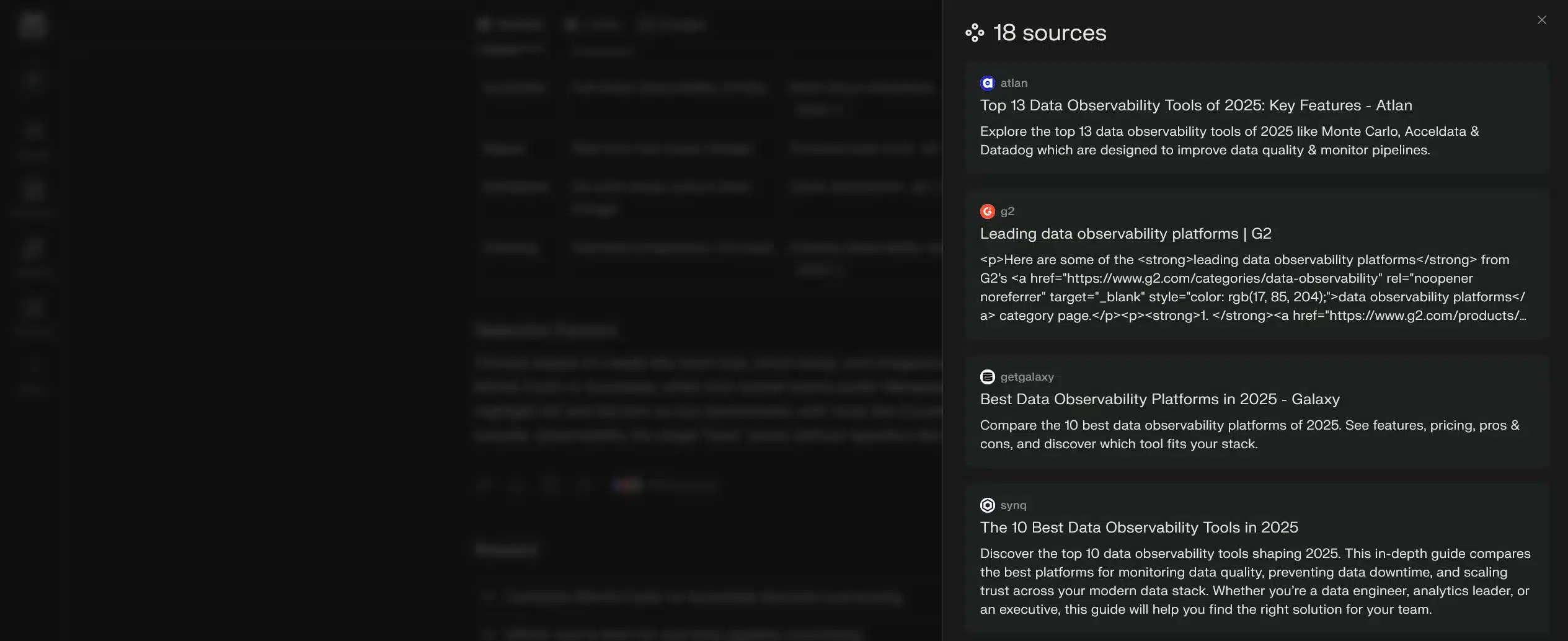
Their entire user experience is built around providing clear, verifiable sources, which means they heavily favor citations.
Conversational platforms like ChatGPT often provide more narrative, summary-style answers.

In these cases, they’re more likely to reference a well-known brand by name, which results in more mentions.
Should You Prioritize Citations or Mentions?
The data shows this is the wrong question. While citations and mentions are different, the most successful brands treat them as two parts of the same goal.
According to a recent study, content that’s both mentioned and cited is three times more stable in AI-generated answers than content that only earns a citation.
Pursuing one without the other leaves you with an incomplete and volatile strategy. A durable presence in AI search requires a unified approach that’s built on two pillars:
1. Build a Citable Content Moat
The foundation of any AI visibility strategy is creating content that’s comprehensive, clearly structured, and verifiably authoritative. This is what makes your content trustworthy enough for an AI to use as a source in the first place. This entire process is part of a discipline known as Generative Engine Optimization (GEO).
2. Amplify Your Mentionable Brand Signals
With a strong content foundation in place, the next step is to build the off-page authority that makes your brand the default choice in your niche. This involves actively getting your brand discussed on reputable third-party sites, in news articles, and on industry podcasts. You can learn more in our guide on how to optimize for AI search.
A citable content library gets you into the game by proving your expertise. A mentionable brand is what helps you win the game by becoming the recognized leader. The most dominant companies do both.
How GetMint Measures Your AI Footprint
Now that you understand the difference between a citation and a mention, your next step is to measure them.
Traditional analytics platforms are blind to this new ecosystem. They’re built to track clicks and traffic, which means they miss nearly 60% of searches that are zero-click and provide no visibility into the brand conversations happening inside AI models. This leaves you with an incomplete picture of your performance.
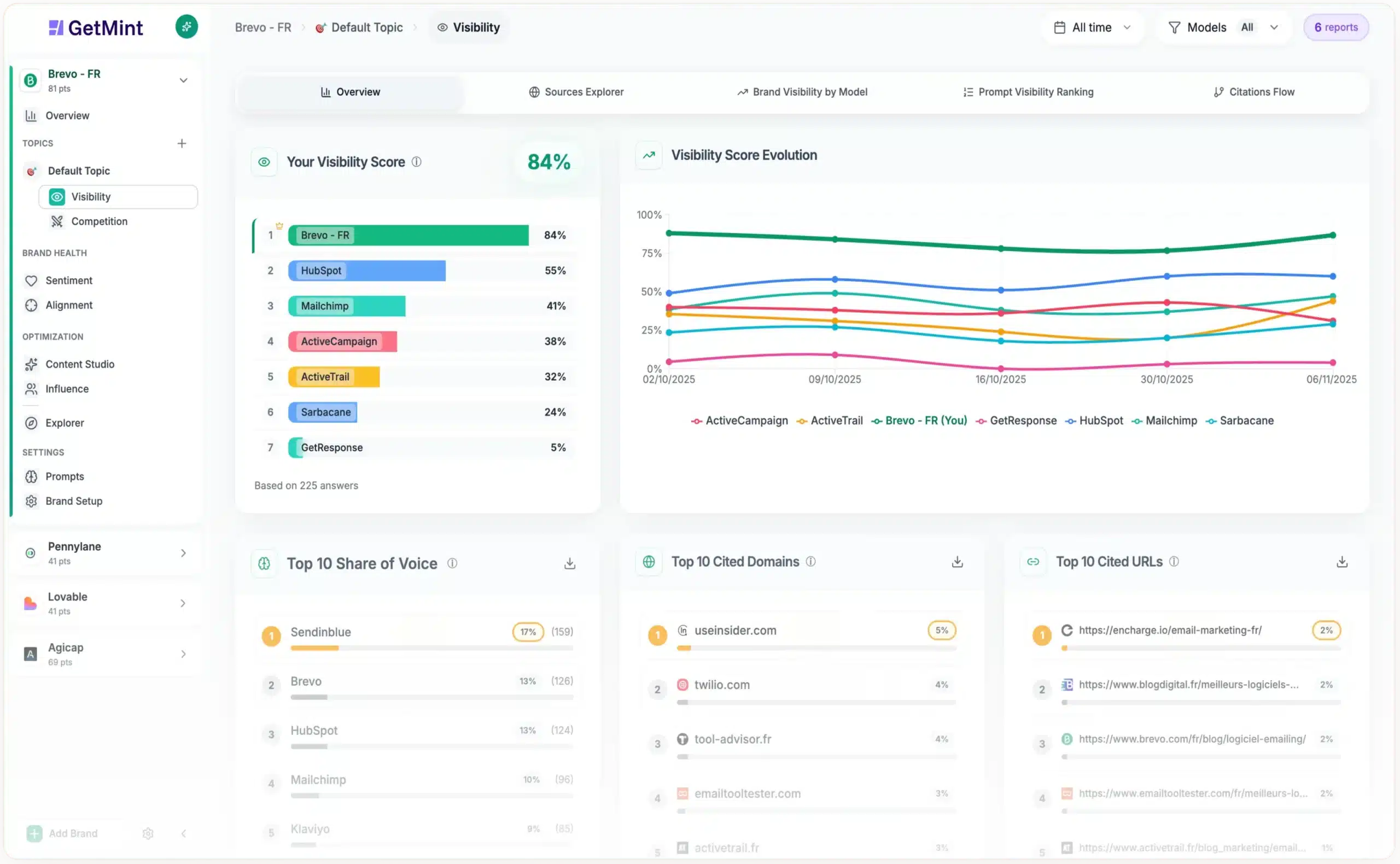
GetMint is a specialized AI visibility platform we built to fill that gap. It gives you a unified dashboard to:
- Track both your citations and your brand mentions across all major AI platforms, so you can see the complete picture of your AI footprint.
- Benchmark your performance against competitors, identifying exactly where they’re being cited and mentioned so you can build a targeted strategy to win that visibility back.
- Analyze the context of your mentions to understand how AI models perceive your brand.
Instead of guessing, you get the data you need to make both citations and mentions a measurable part of your marketing strategy.
Run your AI visibility audit today to see where you stand.
Frequently Asked Questions (FAQs)
Which is better: an AI citation or an AI mention?
They have different jobs. An AI citation is a tactical win that proves your content is a trustworthy source and drives direct traffic. An AI mention is a strategic win that proves your brand is an authority in the market and drives the conversation.
The goal is not to choose one but to build a strategy that earns both.
Do AI mentions and citations help with traditional SEO?
Yes, they are strong signals of authority. Ahrefs found that brand mentions are a significantly stronger indicator of visibility in Google’s AI Overviews than a site’s backlink profile.
The qualities that make content citable and a brand mentionable (authority, trustworthiness, and clear structure) are the same qualities that traditional search engines reward.
Is it possible to optimize for both at the same time?
Yes, and you should. The most durable AI visibility strategies earn both. The process involves building a foundation of authoritative, well-structured content that is designed to be citable, and then amplifying that content through off-page strategies (like guest appearances and expert commentary) that make your brand mentionable.
How can you track both citations and unlinked mentions?
You can’t with traditional analytics. Tools like Google Analytics are built to measure clicks and traffic, so they have a blind spot for unlinked brand mentions and the sourcing that happens inside AI models.
This requires a specialized GEO platform like GetMint, which is designed to monitor AI conversations and track both types of visibility.

