


Enterprise teams face a choice: fast, siloed monitoring or a unified, compliant ecosystem.
Profound AI is a specialized reputation monitor. It excels at tracking brand sentiment quickly but relies on scraped data and sits separate from your core analytics.
Conductor is a unified organic marketing platform. It integrates Generative Engine Optimization (GEO) directly with your SEO and technical data, using official APIs for maximum accuracy.
In this Conductor vs Profound AI guide, we compare the specialized tracker against the enterprise platform to help you decide which infrastructure your brand requires.
Conductor vs Profound AI at a Glance
Here’s a direct comparison of the platforms, emphasizing the features enterprises consider most important when choosing a vendor.
| Feature | Profound AI | Conductor |
|---|---|---|
| Pricing Model | ✅ Transparent ($99/$399/Custom) | ⚠️ Custom (Enterprise Sales) |
| Data Source | ⚠️ Scraping (Simulated User) | ✅ Official APIs (Verified Data) |
| Primary Goal | Reputation Monitoring | Unified Organic Performance |
| Scope | Siloed (AI Data-First) | Integrated (SEO + AI + Tech) |
| Content Tools | ⚠️ Capped Unless on Enterprise Plan | ✅ Unlimited (AI Creator Module) |
| Security | SOC 2 Type II | ISO 42001 (AI Governance) |
| Tech SEO | ⚠️ Site Health Audits | ✅ Full Crawler + Log Analysis |
| Best For | Comms/PR Teams | Enterprise SEO and Digital Teams |
Profound is a specialized tool that tells you what AI bots are doing. Differently, Conductor is a unified platform that puts that AI data next to your Google Search Console and Adobe Analytics data in one view.
Which Platform Has Better Data Integrity?
For enterprise teams, the most critical difference is the data source. How the platform retrieves its answers determines whether your strategy is built on real-time facts or estimated simulations.
Conductor’s Official APIs
Conductor uses official APIs to fetch data from engines like Google and Perplexity. This is a direct feed approach that has several benefits:
- ✅ It’s accurate; you receive the exact data the engine reports, including structured metadata that scrapers often miss.
- ✅ Because it connects via API, it’s stable. Your tracking doesn’t break when ChatGPT changes its interface or updates a CSS class.
- ✅ Using APIs removes the legal gray area of scraping, so compliance is guaranteed. This is a non-negotiable requirement for enterprises adhering to ISO 42001 (AI Governance) standards.
Profound’s Scraping
Profound uses high-scale scraping to simulate user queries. It sends thousands of bots out to “ask” the AI questions and records the answers. This isn’t bad data, per se; it’s experiential data.
Here’s what you should know about scraping:
- ✅ Because Profound simulates a real user on a browser, it captures the exact output a human sees, including the nuances of how the answer is rendered visually.
- ✅ While less stable than an API, this approach is excellent for spot checks and sentiment analysis where you want to see the raw, messy reality of the user experience.
- ⚠️ However, scraping is inherently volatile. If an AI engine updates its bot-detection logic, scraping tools can face downtime.
→ If your priority is governance and stability, Conductor is the only choice. If your priority is sentiment checks (seeing what the user sees right now) without needing a legal compliance review, Profound’s simulation approach is highly effective.
Which Platform Tracks the Right Engines?
If you can’t see the engine, you can’t fix the citation. Both platforms cover the major players, but they manage access differently.
Profound’s Tiered Access
Profound uses a gatekeeping model. Your ability to see the market depends entirely on your monthly subscription level.
- Starter ($99/mo): This tier is restricted to ChatGPT only. You’re blind to Google and Perplexity.
- Growth ($399/mo): This tier unlocks Perplexity and Google AI Overviews, so you can track them alongside ChatGPT.
- Enterprise (Custom): This tier unlocks the long tail of 10 engines (Claude, Meta AI, etc.).
This model forces a hard choice: do you want to save money, or do you want to see the whole picture?
Conductor’s Strategic Access
Conductor doesn’t gate engines behind arbitrary small-business tiers. It customizes the view based on enterprise strategy. However, it prioritizes data quality over breadth.
Here’s how this prioritization works in practice:
- Conductor allows you to allocate your query volume to the engines that matter most to your business, including ChatGPT, Perplexity, and Google AIO. You configure the tracker to focus on where your customers are.
- Because it uses APIs for major engines, it ensures that the data you get from these sources is accurate.
- ⚠️ For that reason, it pushes models that drive minimal traffic away. Unlike Profound, it doesn’t support niche models like Grok, DeepSeek, and Meta.
→ Profound forces you to upgrade to see the basics (Google/Perplexity) but tracks more engines overall. Conductor builds the view around your specific needs but deprioritizes niche models like Grok, focusing on ChatGPT, Perplexity, and Google AIO.
Can You Prove the ROI of Your GEO Strategy?
Besides what they track, what distinguishes between GEO platforms is what they connect their metrics to.
In the enterprise, ranking #1 in ChatGPT is a vanity metric unless you can prove it drove traffic or revenue. This is where the gap between Conductor and Profound widens.
Conductor’s Revenue View
Conductor’s main argument is that AI search visibility doesn’t exist in a vacuum. It integrates GEO directly into your organic marketing stack to solve the attribution puzzle.
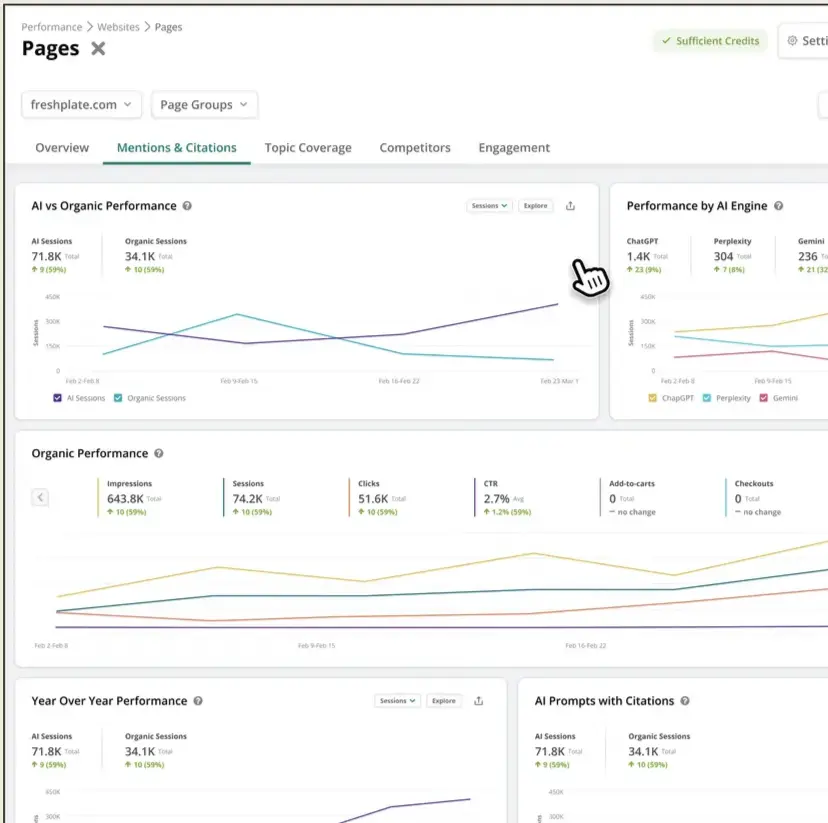
Here’s how Conductor enables you to calculate your ROI:
- Conductor unifies analytics. It overlays AI visibility data with your Google Analytics or Adobe Analytics data. You don’t just see “We ranked in ChatGPT”; you see “We ranked in ChatGPT, and traffic to that page went up 12%.” This is important for tracking the best sales metrics for AI visibility.
- Conductor also includes a changelog feature. This is transformative for proving ROI. It tracks every change you make to a page (e.g., “Updated schema for AI”). It then automatically correlates that timestamp with subsequent performance changes. This allows you to pinpoint which changes affected referral traffic to your CFO.
Profound’s Visibility View
Profound is excellent at telling you what the AI thinks of you, but it views that data in isolation.

Even though it integrates with Google Analytics, it doesn’t natively calculate ROI like Conductor does.
Here’s how Profound differs from Conductor in this aspect:
- Profound only tracks visibility scores, sentiment, and rank. These are external metrics. It tells you if you’re winning the conversation, but it doesn’t natively tell you if that conversation is making you money.
- ⚠️ Even with GA integration, proving ROI typically requires exporting Profound’s data and merging it with your analytics platform manually. This creates a silo where your GEO data lives separately from your SEO and revenue data.
→ Choose Profound if you’re a PR or brand lead who primarily cares about AI mentions and share of voice. Choose Conductor if you’re a digital leader who needs to prove the revenue impact of AI search to the board.
Can You Fix the Content Gap Inside the Platform?
Monitoring AI search visibility is only the first step. Once you identify that a competitor is winning the answer, you need to update your content to reclaim the citation. This is where the difference between a suite and a monitor becomes painful for marketing teams.
Conductor’s Content Creation Module
Conductor treats Answer Engine Optimization (AEO) as a production workflow. Its Creator module is a full-scale generation engine designed for enterprise volume.
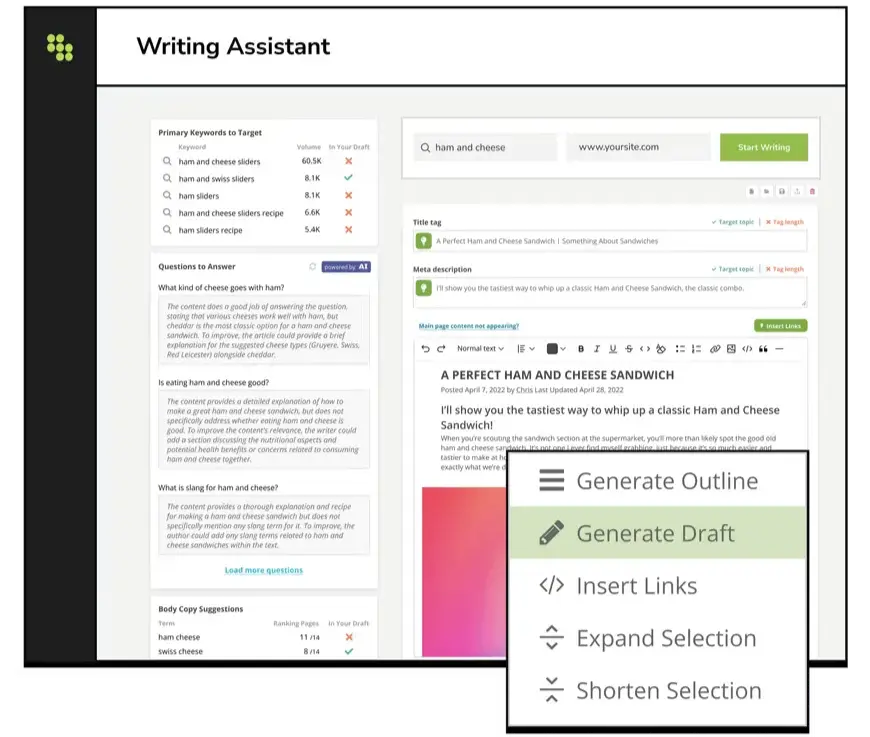
Here’s what makes it special:
- It uses Retrieval-Augmented Generation (RAG) to pull from your own high-performing content and performance data. This ensures the output sounds like your brand, not a generic bot.
- Conductor allows you to tailor content specifically for different user intents (e.g., “Executive” vs. “Implementer”), which is critical for winning complex AI citations.
- There are no arbitrary caps. If you need to update 500 pages to fix a technical gap, Conductor’s workflow supports that scale.
Profound’s Capped Article Generator
Profound markets itself as a “Read/Write” platform, but for most teams, it’s primarily a “Read” platform.
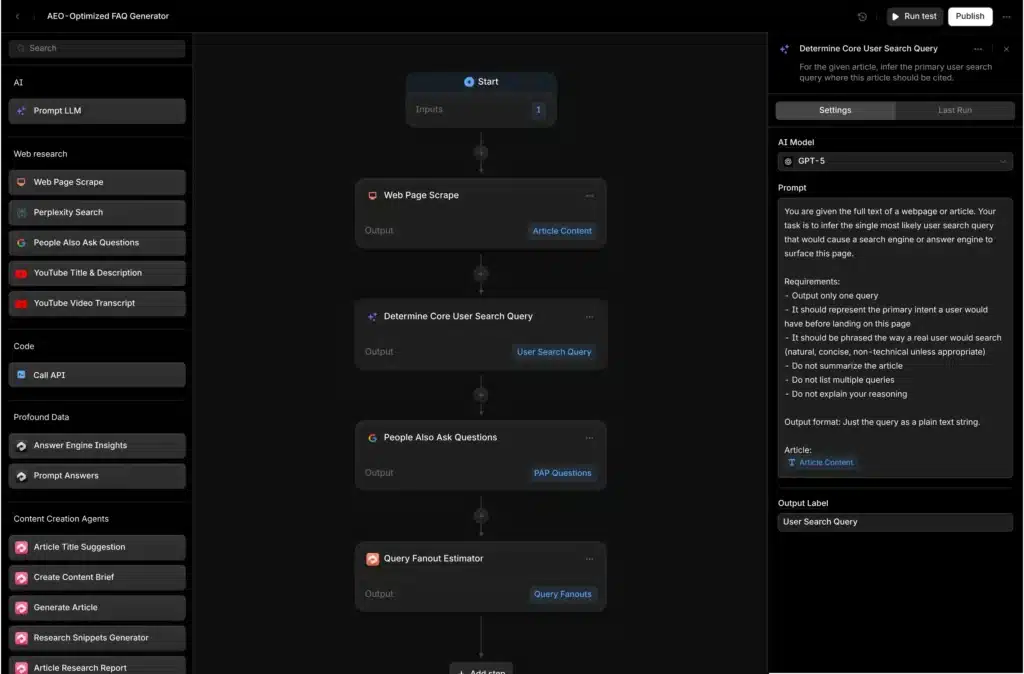
Here’s what you need to keep in mind if you plan to use Profound for content generation:
- ❌ Profound’s Starter plan ($99/mo) completely lacks content optimization features.
- On the standard Growth plan ($399/mo), Profound limits content generation to just 3 articles per month. For custom limits, you must upgrade to an Enterprise plan.
- If you identify 50 keywords where you’re losing visibility, Profound will help you fix three of them and leave the 47 others up to you. You’ll need to export the data and use a separate tool to optimize for AI search.
→ Profound is a diagnostic tool; it tells you what’s broken but relies on you to fix it elsewhere. Conductor is an execution engine that gives you the tools to rewrite your entire site without leaving the tab.
Which Platform Understands the User Better?
Both platforms tell you what the AI is talking about, but Conductor uses its API access to categorize who is asking and why.
Conductor’s Intent and Persona Classification
Because Conductor integrates with your analytics and uses official data models, it goes beyond simple keyword tracking.
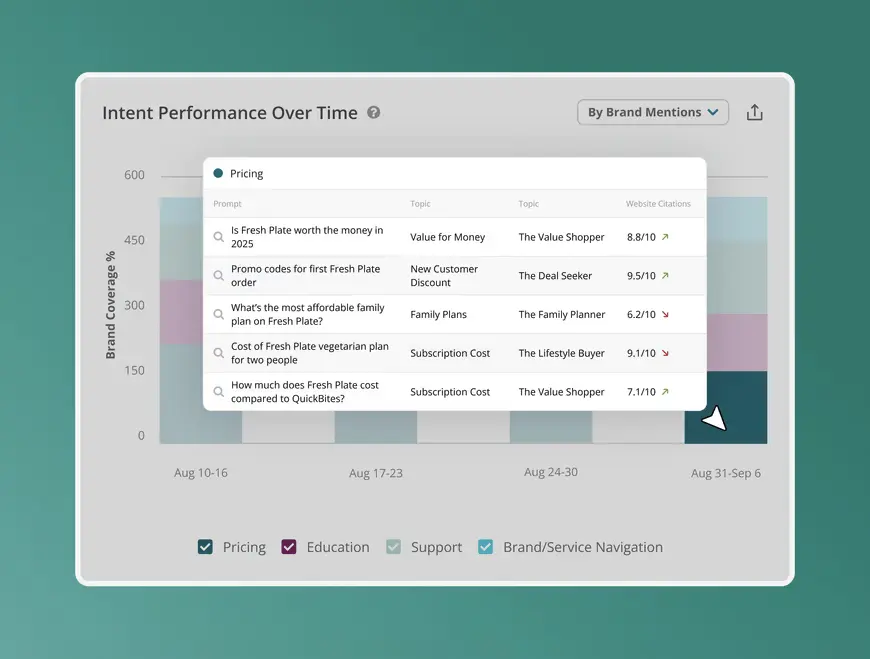
It classifies AI search competitor analysis data by user intent and persona.
- Journey stage: It shows you a query and tells you if it’s “early stage awareness” or “late stage decision.”
- Persona mapping: It can distinguish if you’re winning visibility with “technical implementers” vs. “executive buyers.”
This allows you to prioritize your GEO strategy. You can ignore the low-value noise and focus entirely on the high-intent questions that drive revenue.
Profound’s Thematic Market Research
Profound excels at qualitative research. Its Conversation Engine is designed to map the broad themes of a market.
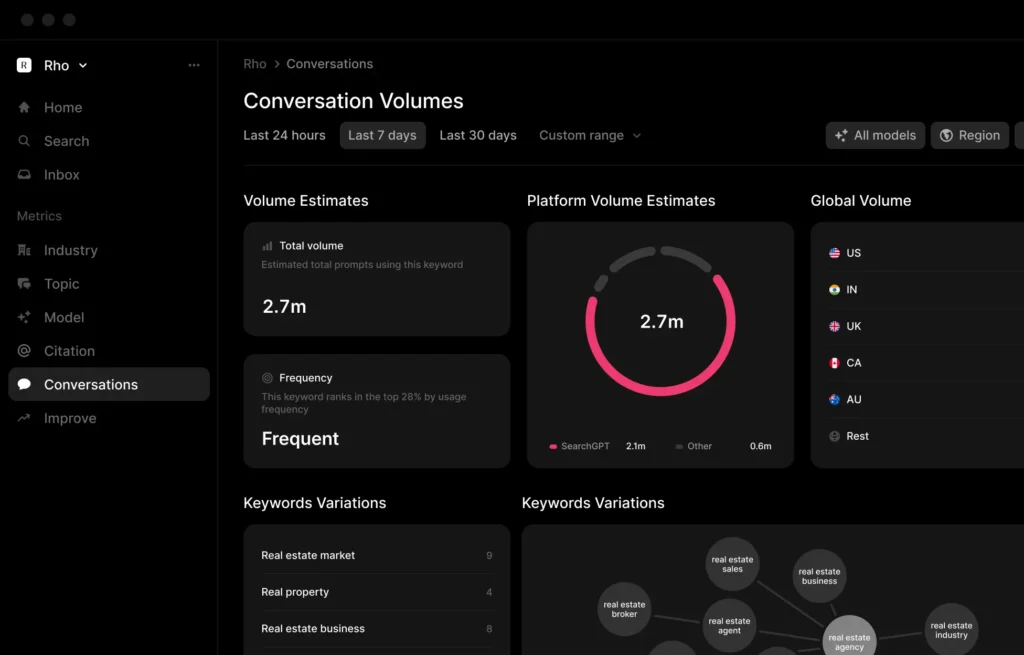
Here’s how it works:
- Topic clusters: It groups queries into broad categories (e.g., “Pricing,” “Security,” and “Integrations”). This is excellent for high-level brand health monitoring.
- Sentiment trends: It visualizes how the AI’s “mood” changes over time regarding specific topics.
While this is great for broad trends, it lacks the granular persona segmentation that Conductor provides. You see what is being asked, but you have less context on who the AI is serving that answer to.
→ Choose Profound if you need to understand market trends and broad sentiment. Choose Conductor if you need to target specific buyer personas to drive conversions.
Is Your AI Data Legally Compliant?
For a startup, security means “don’t get hacked.” But for a Fortune 500, security means “don’t get sued.”
As AI brand monitoring becomes a general business function, legal teams are scrutinizing how these tools gather data and how they handle it.
Conductor’s Responsible AI Management
Conductor is built for highly regulated industries like finance, healthcare, and insurance. It goes beyond standard security to offer specific AI governance.
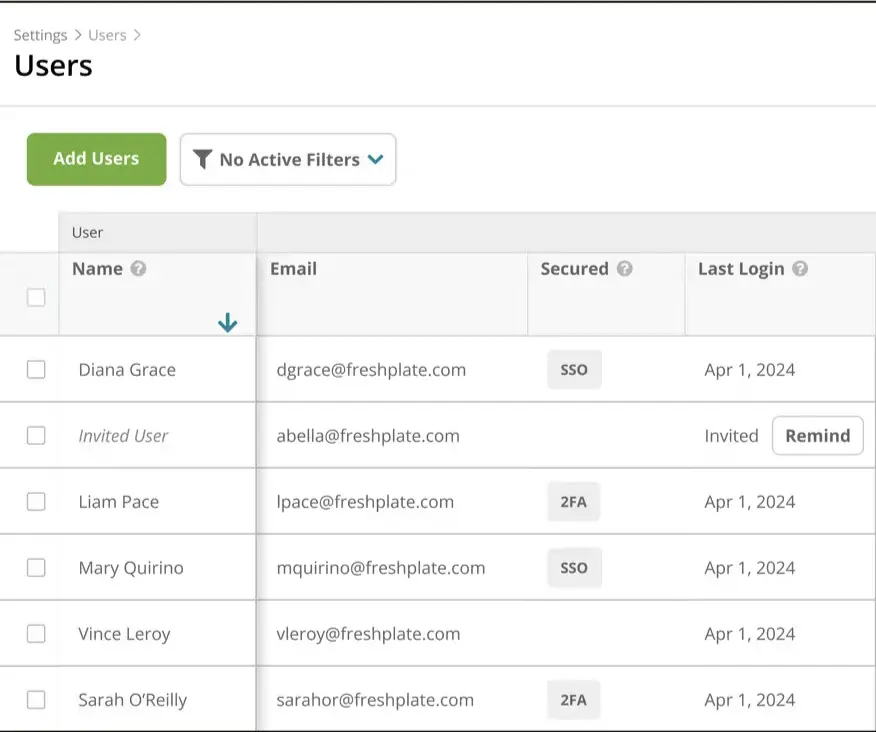
Here’s what makes its security enterprise-level:
- ISO 42001 certification: This is the global standard for artificial intelligence management systems. Conductor is one of the few platforms to hold this, proving they manage AI risks, ethics, and data responsibly.
- No scraping risk: Because it uses official APIs, Conductor eliminates the legal liability associated with scraping intellectual property or violating terms of service, which are major concerns for enterprise legal teams.
- Enterprise access: It includes advanced Role-Based Access Control (RBAC) and SSO to ensure strict data hierarchies across global teams.
Profound’s Standard SaaS Security
Profound meets the industry standard for a SaaS tool, but it lacks the specialized AI governance credentials.
The platform is SOC 2 Type II compliant. This confirms they have strong internal controls for data privacy and security. For most SaaS and tech companies, this is perfectly sufficient. However, the reliance on scraping can raise flags for strict legal teams concerned about data provenance and IP usage rights.
→ If you’re a B2B SaaS company, Profound’s SOC 2 compliance is likely enough. If you’re a bank, hospital, or public company, Conductor’s ISO 42001 certification and API-first approach are non-negotiable safeguards.
Will You Know When Your Visibility Breaks?
Technical SEO determines if an AI bot can actually read your answer. If your server slows down or a new code deployment accidentally blocks a crawler, your visibility vanishes instantly.
The difference between these platforms is reaction time. Conductor wakes you up when something breaks; Profound waits for you to log in and check.
Conductor’s Active Alarm System
Conductor includes monitoring features that act as a safeguard for your SEO visibility.
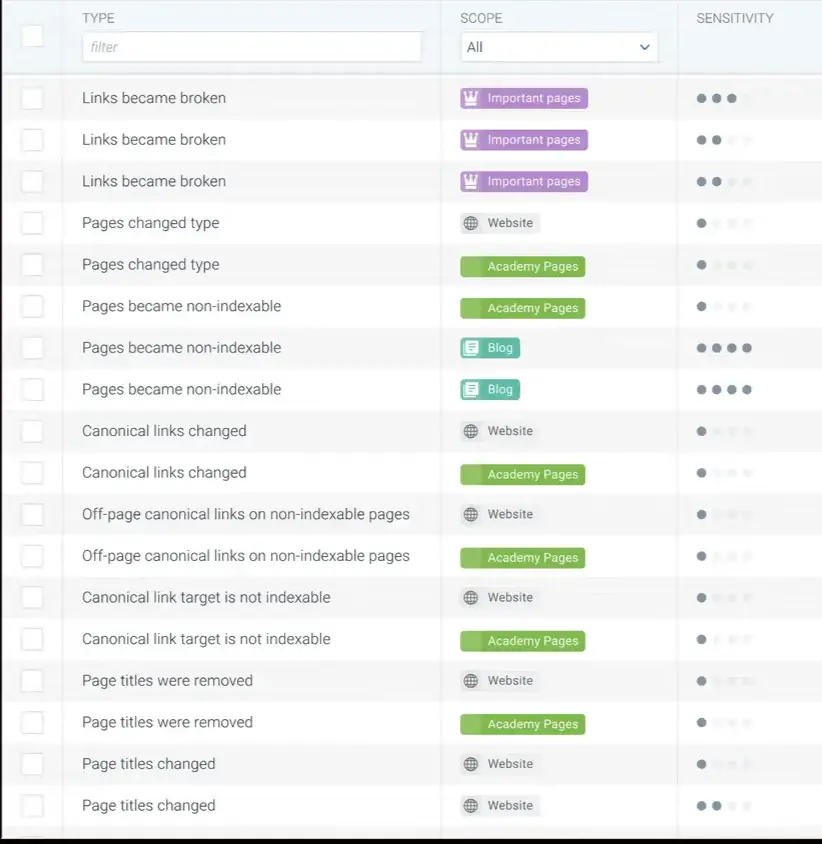
Its notable capabilities include:
- Real-time alerts: It tracks rankings and monitors the site itself. If schema markup disappears, metadata changes, or a page breaks, Conductor flags the issue immediately.
- Preventative protection: It helps you fix problems before they impact Google or AI search visibility by catching SEO regressions quickly.
- Change detection: It automatically logs content and metadata changes to your tracked pages. This lets you pinpoint exactly which update caused a drop in visibility without guesswork.
Conductor’s monitoring is focused on SEO and content integrity. It helps you protect your search visibility through technical and editorial consistency.
Profound’s Passive Diagnostics
Profound’s technical capabilities are diagnostic. It runs health audits to check if your site is readable by bots and identifies issues like blocking scripts or HTML structure.
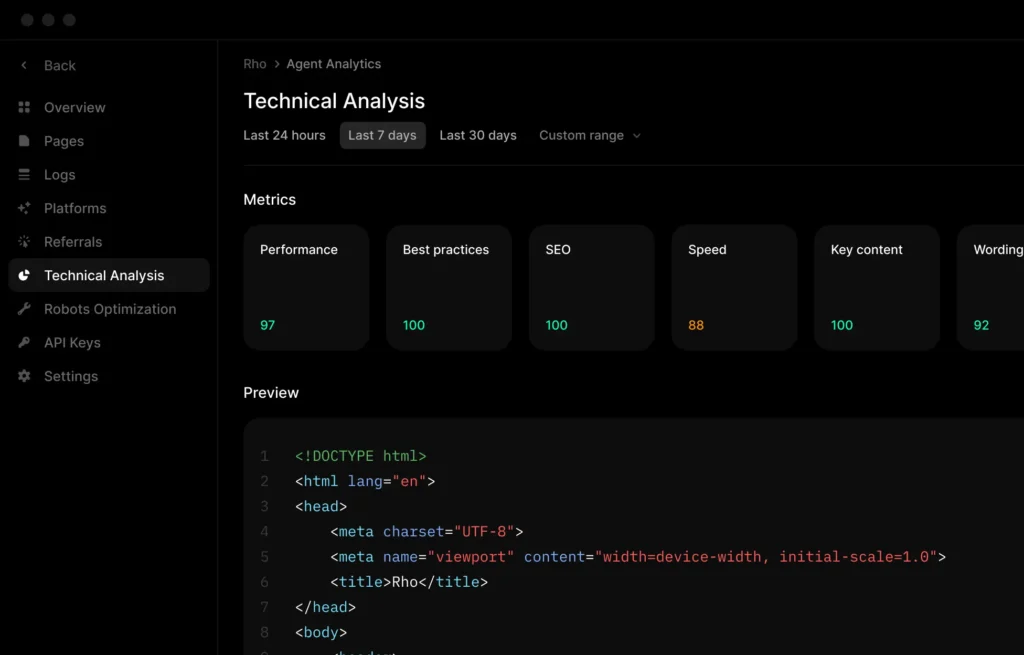
However, these are point-in-time checks. It tells you why you aren’t ranking, but it rarely warns you before you lose the rank.
→ Profound is sufficient for marketers running a monthly health check. Conductor is essential for engineering and product teams who need to protect a high-traffic site from regression 24/7.
How Hard Is It to Buy and Onboard?
The final point isn’t feature-related. Logistics are as important as a platform’s features, so the question of how quickly you can actually get data is very important for enterprises.
Profound’s Agile Start
Profound operates like a modern SaaS tool. It’s transparent and easy to set up.
- The plans are public. Profound starts at $99/mo for the Starter plan and includes a mid-tier, $399/mo Growth plan for agencies. The Enterprise plan is priced based on your organization’s needs.
- You can put Profound on a corporate credit card and have a visibility report ready for your VP by the end of the day. There’s no implementation time or complex configuration required.
This self-serve model means you get less hands-on support unless you upgrade to a custom Enterprise plan.
Conductor’s Enterprise Infrastructure
Conductor operates like enterprise infrastructure. It’s high-touch and high-customization and is priced at the upper end of SEO and GEO tools.
Here’s what sets it apart from other GEO tools:
- There’s no public pricing page. The “Pricing” page leads to a page listing the different modules Conductor offers with options to try them for free. Costs are actually tailored based on your domain count, page volume, and module selection, and you must go through a sales call before onboarding.
- Because Conductor integrates with your analytics, CMS, and technical stack, onboarding is a process. It involves a dedicated team to tailor the platform to your specific KPIs.
Conductor offers a 3-week free trial for individual modules, allowing you to validate the tech. However, unlocking the full platform requires a sales conversation.
→ Choose Profound if you need answers today. Choose Conductor if you’re planning a long-term digital transformation and have the timeline to support a proper enterprise rollout.
The Third Option: Action Without the Enterprise Bloat
If you’re a Fortune 500 company needing ISO 42001 compliance, Conductor is the logical option. If you’re a PR team needing a quick reputation check, Profound is excellent.
But for most digital teams, both options come with caveats. You’re either stuck with a “read-only” dashboard that refuses to help you write content outside of an Enterprise plan (Profound) or a massive enterprise suite that requires a long procurement cycle (Conductor).
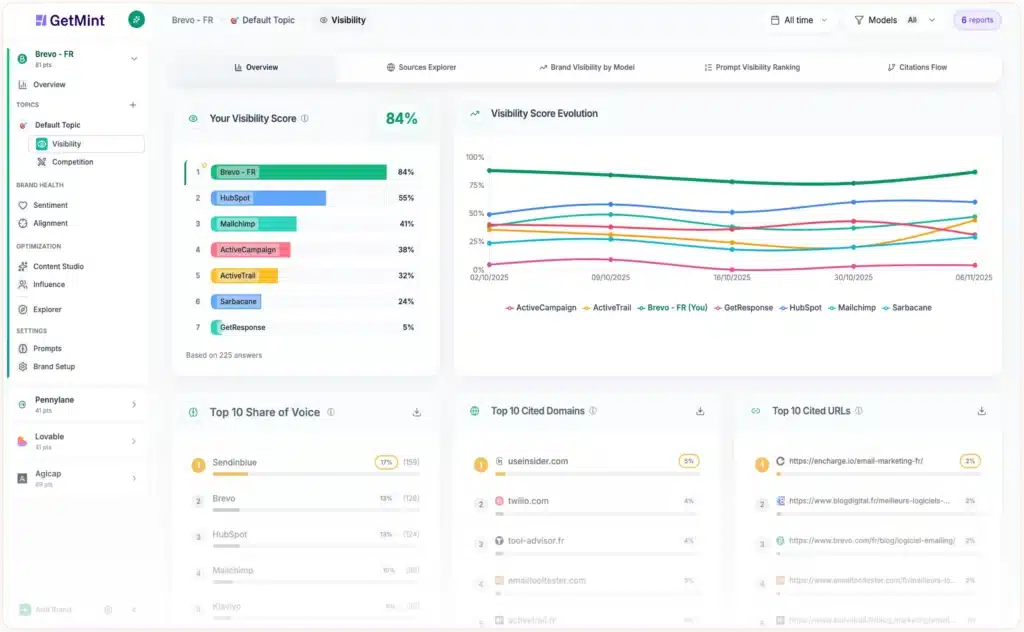
If you need to fix the visibility problem today, not next quarter, GetMint might be the solution you’re looking for. It provides you with the data of a monitor and the tools of a creator without the bloat.
Here are the three features you’ll enjoy as a GetMint user:
1. Immediate Content Execution
Profound caps content generation at 3 articles/month outside of the Enterprise plan. Conductor requires a complex implementation to start the creator workflow.
GetMint includes the Content Studio on every plan. If you spot a visibility gap in Perplexity, you can generate a data-backed brief and draft immediately. It connects the insight to the action in one click, empowering you to optimize for AI search without delays.
2. Professional Access at Consumer Speed
Conductor hides its pricing and platform behind a sales wall. Profound gates the major engines (Perplexity/Google) behind its $399/mo tier.
GetMint offers ChatGPT, AI Overviews, and Perplexity on its Starter plan (€99). You get professional-grade visibility data on a credit-card-friendly budget immediately.
3. Marketer-First UI
Conductor is built for technical SEOs who need log file analysis. GetMint is built for content and brand leads.
The dashboard simplifies the complexity. Instead of technical health scores, it focuses on brand health, telling you exactly how the AI frames your value proposition versus your competitors and how it views you.
It’s the fastest way to control the narrative without needing an engineering degree.
Final Verdict: Which Platform Is Right for You?
Here’s how the three platforms stack up when you look at their primary use cases for the enterprise.
| Feature | Profound | Conductor | GetMint |
|---|---|---|---|
| Pricing Model | Transparent ($99/$399/Custom) | Custom (Sales Quote) | Transparent (€99/€299/€549+) |
| Workflow Scope | Integrated (GEO + Content) | Unified (SEO + GEO + Tech) | Integrated (GEO + Content) |
| ROI Proof | Visibility Metrics | Revenue Attribution | Narrative Control |
| Content Tools | ⚠️ (Capped Unless on Enterprise) | ✅ | ✅ |
| Governance | SOC 2 Type II | ISO 42001 (AI Specific) | Standard |
| Best For | Comms and PR Teams | Enterprise Digital Teams | Agile Marketing Teams |
So, which tool should you choose?
- Choose Profound AI if you’re a VP of communications who needs a quick, credit-card-ready solution to monitor brand sentiment and share of voice without involving IT.
- Choose Conductor if you’re a digital leader at a Fortune 2000 company. If you need to prove revenue impact, ensure ISO 42001 compliance, and unify your entire organic stack, the investment is necessary.
- Choose GetMint if you’re a content lead who needs to track the major engines and fix the content gaps immediately. It offers the speed of Profound with the execution tools of Conductor, without the enterprise price tag.
Stop staring at siloed dashboards. Start your GetMint audit today and turn your visibility into action.
Frequently Asked Questions (FAQs)
How much does Conductor cost?
Conductor doesn’t publish pricing. It’s an enterprise platform with costs tailored to your domain count, page volume, and module selection (Intelligence, Creator, etc.). You’ll need to schedule a sales consultation to get a quote.
Is Profound data less accurate than Conductor?
Profound uses scraping (simulation), while Conductor uses APIs (direct feed). Scraped data captures the exact visual experience of a user but can be volatile if the engine updates its layout.
API data is more stable and verified but might miss visual nuances. For strict compliance, API data is preferred.
Can Profound prove ROI?
Not natively. Profound integrates with Google Analytics to show traffic alongside visibility metrics, but it doesn’t natively calculate ROI.
To prove ROI, you still need to merge its data with revenue or conversion reporting manually. Conductor automates this process with unified ROI dashboards.
Does Conductor replace tools like Semrush or Ahrefs?
Yes. Conductor is a full-stack SEO platform that tracks backlinks, technical health, and traditional keyword rankings alongside AI visibility.
It’s designed to replace your current SEO suite. Profound is strictly a reputation monitor and must be used alongside an SEO tool, not instead of it.
Can I try them for free?
Yes, but it varies. Conductor offers a free 3-week trial for individual modules (like Creator and Intelligence) so you can validate the tech before signing a contract. Profound typically requires a paid plan, though they offer “try for free” access to the Growth plan.
Which is better for global brands?
Conductor. Because it uses official APIs and is built for multi-domain enterprise management, it handles global rank tracking and regional nuances seamlessly.
Profound restricts its self-serve plans to a single region and language, forcing you into a custom contract for international tracking.
Does Conductor write content for me?
Yes. Conductor’s Creator module is a full-scale AI content engine. Unlike Profound (which caps you at 3 articles/mo outside of the Enterprise plan), Conductor allows for unlimited, RAG-based content generation tailored to specific buyer personas.
Why does ISO 42001 matter?
ISO 42001 is the global standard for AI governance. For highly regulated industries (finance, healthcare, etc.), using a vendor with this certification proves that they manage AI ethics, data privacy, and risk according to strict legal standards. Conductor has it; Profound currently has SOC 2.

