


AthenaHQ and AirOps are the two heavyweights of action-first Generative Engine Optimization (GEO). Unlike passive monitors that just show you a chart, both of these platforms provide the automation infrastructure to fix your content.
But they fundamentally disagree on how to automate that work.
AirOps has a no-code builder that lets you construct custom logic grids, where you define every step of the chain. AthenaHQ relies on autonomous agents that scan your visibility, identify gaps, and draft the fix for you.
In this AthenaHQ vs AirOps guide, we compare the platforms’ GEO features to help you decide which level of automation your team needs.
AthenaHQ vs AirOps at a Glance
We’re comparing AthenaHQ against AirOps to see how these AI visibility platforms fare against each other.
These features will depend on your tier. For example, AirOps’ entry tier monitors ChatGPT only and provides access to one user, whereas AthenaHQ’s self-serve plan monitors 8+ engines and gives you unlimited user seats.
We’re focusing on AthenaHQ’s Self-Serve plan ($295/mo) to AirOps’ functional Pro plan, not the Solo plan!
| Feature | AthenaHQ (Self-Serve) | AirOps (Pro) |
|---|---|---|
| Entry Price | $295/mo | Custom (Usage-Based) |
| Pricing Model | Credits (Consumption Based) | Tasks (Volume Based) |
| Automation Style | Autonomous Agents | Logic Grids |
| AI Engine Coverage | ✅ 8+ | ⚠️ 4 |
| Volume | 3,600 Credits | 250 Prompts + 75,000 Tasks |
| Content Tools | ⚠️ Basic | ✅ Advanced |
| ROI Metric | Revenue (Shopify/GA4) | Efficiency (Content Volume) |
| Content Control | Agents + ACE Algorithm | Human-in-the-Loop |
| User Seats | Unlimited | Unlimited |
| Support | Community + Live Chat |
AthenaHQ is better if you need to prove the value of GEO (revenue attribution). AirOps is better if you need to control the process of GEO (custom workflows).
Which Platform Tracks More Engines?
To fix your AI search visibility, you first need to see it. This is where native GEO platforms differ from platforms that added AI visibility features later.
AthenaHQ’s Wide Platform Coverage
AthenaHQ was built specifically for GEO.
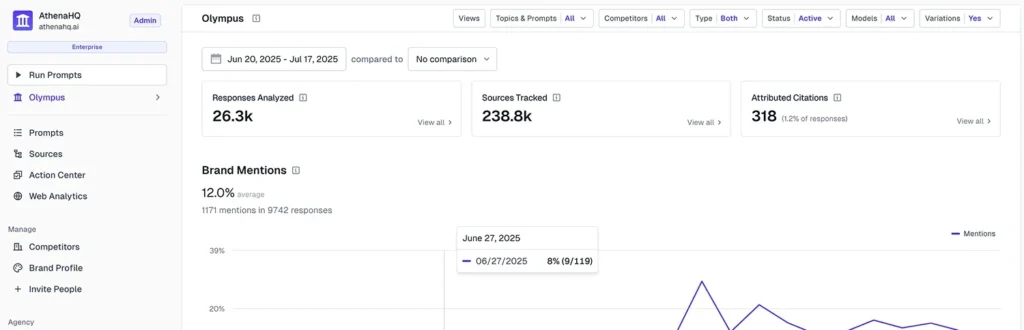
Because of this, it prioritizes broad engine coverage across all its plans.
- It tracks 8+ models immediately, including the long tail of LLMs like Claude, Grok, and Copilot.
- It supports region-based tracking, which is important for global brands, though this is gated behind a custom contract (Enterprise only).
- AthenaHQ uses a machine learning model to estimate the search volume and dollar value of specific prompts. This helps you prioritize high-value questions over low-value queries.
AirOps’s Focused Monitoring
AirOps recently added its AI search visibility module as an expansion to its workflow platform.

Consequently, its tracking is more focused. It primarily tracks the major AI engines: ChatGPT, Gemini, AI Mode, and Perplexity.
While this covers the bulk of current traffic, it leaves you blind to niche or emerging models like Grok or specialized vertical AIs. It’s designed to give you enough data to run a workflow, not necessarily to map the entire market landscape.
→ If you need a complete picture of the AI landscape (including open-source models), AthenaHQ is superior. If you just need to track the most important AI models to feed your content factory, AirOps is enough.
How Do You Fix the Content Gap?
Both platforms move you from insight to action, but they define action differently. One asks you to build the factory; the other asks you to trust the robot.
AirOps’s Logic Builder
AirOps gives you the blueprints to construct your own content supply chain.

Its Logic Grids allow you to chain specific steps together (e.g., Pull SERP Data → Summarize Top 3 Results → Draft Section → SEO Check).
Other great features AirOps includes are:
- Human-in-the-loop: You can insert a human review step anywhere in the chain. The automation pauses, an editor reviews the draft, approves it, and the automation resumes to publish it to Webflow or WordPress.
- Brand kits: You upload your style guides and examples, and AirOps enforces them at every step of the grid. It ensures the output sounds like you, not ChatGPT’s default voice.
- Integrations: AirOps connects directly to Webflow, WordPress, Contentful, Strapi, and Sanity. It also includes integrations for SEO research (Moz, Semrush, etc.), project management (Asana, ClickUp, etc.), and socials (YouTube and Reddit).
AthenaHQ’s Autonomous Agents
AthenaHQ focuses on speed over granular control. Its Action Center uses autonomous agents to identify gaps and draft the fix automatically.
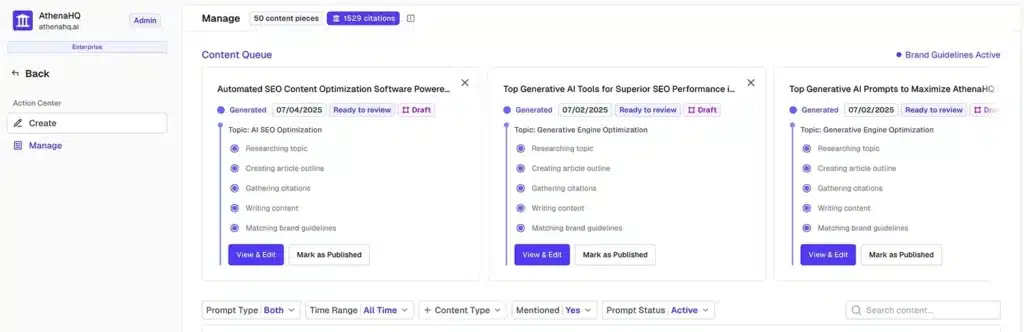
Some of the standout features this platform offers are:
- ACE algorithm: This proprietary algorithm analyzes AI search results to predict why certain sources are cited. It identifies citation signals and patterns to inform AthenaHQ’s agents on how to structure and reference material to increase citation likelihood.
- One-click fix: Instead of building a 10-step grid, you point an agent at a URL, and it rewrites the content to target specific AI personas.
- Shopify native: While it lacks AirOps’ broad CMS support (Webflow/WordPress), it offers deep integration with Shopify, allowing you to publish GEO-optimized blogs directly to your store.
→ Choose AirOps if you have a strict editorial process and need human-in-the-loop control before publishing. Choose AthenaHQ if you need to optimize thousands of pages at scale and trust the algorithmic approach.
Can You Prove the ROI?
The hardest question in GEO is, “Did this make us any money?”
Most tools stop at “rank.” They tell you that you appeared in the answer. But appearing isn’t selling. This is where the two platforms diverge completely.
AthenaHQ’s Revenue Engine
AthenaHQ is one of the few platforms attempting to solve the attribution black box.
- Shopify and GA4 integration: It connects your visibility data directly to your store data. It attempts to attribute revenue back to specific AI search sessions.
- Dollar value forecasting: Instead of just showing search volume, AthenaHQ estimates the monthly potential value of a prompt (e.g., “$121,000”).
This allows marketing leaders to justify the budget. You aren’t reporting 30% more citations; you’re reporting attributed revenue from ChatGPT.
AirOps’s Efficiency Engine
AirOps proves ROI through operational efficiency, not direct revenue attribution. The value proposition is time; producing 50 articles in 2 hours instead of 2 weeks completely transforms your content strategy.
It also tracks AI search visibility (rankings and mentions), but it doesn’t natively connect that data to a checkout event in Shopify. You have to infer the revenue impact manually.
→ If you’re an e-commerce brand, AthenaHQ is the clear winner for its ability to track the sales metrics that matter. If you’re a media publisher or SaaS, AirOps wins by reducing your production costs.
How Do You Pay for Each Platform?
Neither platform is cheap, but they structure their costs differently. You’re either paying for consumption or capacity.
AthenaHQ’s Credit System
AthenaHQ offers a transparent self-serve price, but it comes with a usage cap that requires math.
The self-serve plan costs $295/mo. It uses Credits (3,600/mo). Every time you track a keyword, run an agent, or analyze a competitor, you burn credits. Once you’re out of credits, you can buy more. The Enterprise plan lets you pick a custom amount of credits.
- ⚠️ This makes costs variable. If you want to track 50 keywords daily across 5 engines, you’ll burn through your allowance quickly. You have to constantly manage your credit budget to ensure you don’t run out of data halfway through the month.
AirOps’s Usage-Based Model
AirOps uses a “Task” system. A task is any specific action within a workflow (e.g., “Extract Data” or “Generate Content”). The Pro plan is the functional entry point for GEO (as the Solo plan tracks ChatGPT only), and it offers 75,000 tasks/mo
- ⚠️ While this sounds like a lot, a single complex content workflow might have 20 steps. Running 1,000 articles would burn 20,000 tasks. The volume burns faster than it appears because every intermediate logic step counts against your quota.
You need to go through a sales call and sign up for a custom plan to tailor the number of tasks to your specific needs. According to other independent reviews, the Solo plan starts around $199/mo, whereas the Pro plan costs approximately $1,999/mo. The Enterprise plan is customized based on your organization’s volume requirements.
→ AirOps is more accessible for testing (with its free trials), but its Task model requires careful engineering to avoid waste. AthenaHQ has a steeper entry price ($295/mo), but its credit model is simpler to understand for pure visibility tracking, though it gets expensive if you monitor too frequently.
How Fast Can You Start?
Feature lists ignore the biggest hidden cost of software: setup time. Both tools provide you with automation tools, but the time-to-value differs massively. AirOps needs you to be an architect, whereas AthenaHQ asks you to be a manager.
AirOps’s High Setup/High Control
AirOps is a builder platform. Even though it’s no-code, it’s not no-work. To get value, you must design the workflow. You have to select the models, write the system prompts for every step, and connect the logic nodes.
Building a complete, production-ready content factory in AirOps can take days or weeks of testing or iterating.
- You get a bespoke tool that matches your exact internal Standard Operating Procedures (SOPs) perfectly, provided you dedicate the time to build the workflow for it.
AthenaHQ’s Low Setup/Low Control
AthenaHQ is an agent platform. It comes pre-trained on GEO logic. You don’t build the workflow; you assign the task. You point the agent at a URL and define the goal, and it executes based on its own internal logic. You can start optimizing content in minutes, not weeks.
- However, this means you have less granular control over how it gets to the answer, forcing you to trust their algorithm over your own SOPs in some cases.
→ Choose AthenaHQ if you want same-day results. Choose AirOps if you’re willing to invest two weeks building a custom machine that you’ll own forever.
What Do Actual Users Say About AthenaHQ and AirOps?
We analyzed verified feedback from G2 to identify the frustrating issues you won’t see in a demo.
AirOps’s Pros and Cons
Users love the outcome of AirOps’s tools but struggle with the onboarding.
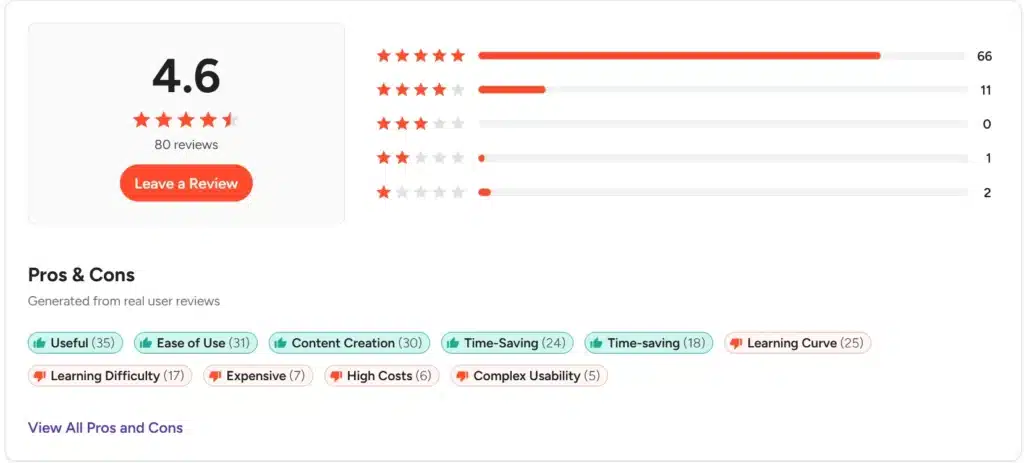
Here are the most poignant pros and cons:
- ✅ Efficiency: 30+ users cited workflow efficiency as a major benefit. Once you build your tools, they just work.
- ❌ Learning curve: A massive 40+ users (combined mentions) flagged the learning curve or complex usability as a downside. AirOps isn’t for the non-technical.
- ❌ Cost: 10+ users specifically mentioned that AirOps is expensive or highly expensive*,* validating that the custom pricing tier is a barrier for smaller teams.
AthenaHQ’s Pros and Cons
Users love AthenaHQ’s data transparency but note the startup growing pains.
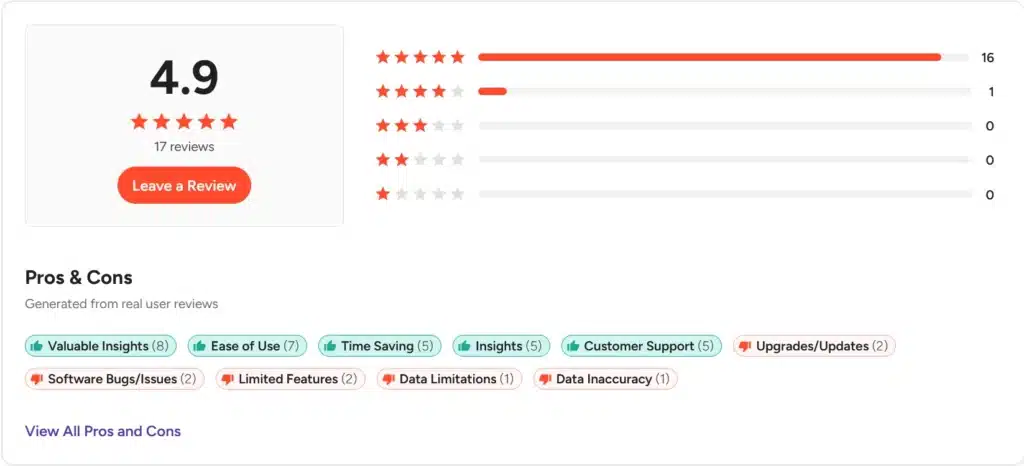
These are the pros and cons that stood out to us:
- ✅ Actionable insights: Users value that the data aren’t just vanity metrics; the platform genuinely helps enhance content strategy.
- ❌ Stability: Users cited software bugs and minor glitches, which is typical for a platform shipping this fast.
- ❌ Data inaccuracy: Some users specifically requested better visibility into prompt volume data, meaning that the credit usage can feel opaque.
The Third Option: Action Without Pricing Caveats
If you’re an agency managing 50 clients, AthenaHQ’s revenue attribution is worth the $295/mo entry fee. If you’re an Ops team building a content factory, AirOps’ logic grids are best in class.
But for most content teams, both models create usage anxiety. You’re constantly doing math (counting credits or tasks) to make sure you don’t hit a wall before the end of the month. Plus, both platforms gatekeep their best features (multi-engine tracking) behind high-tier or custom plans.
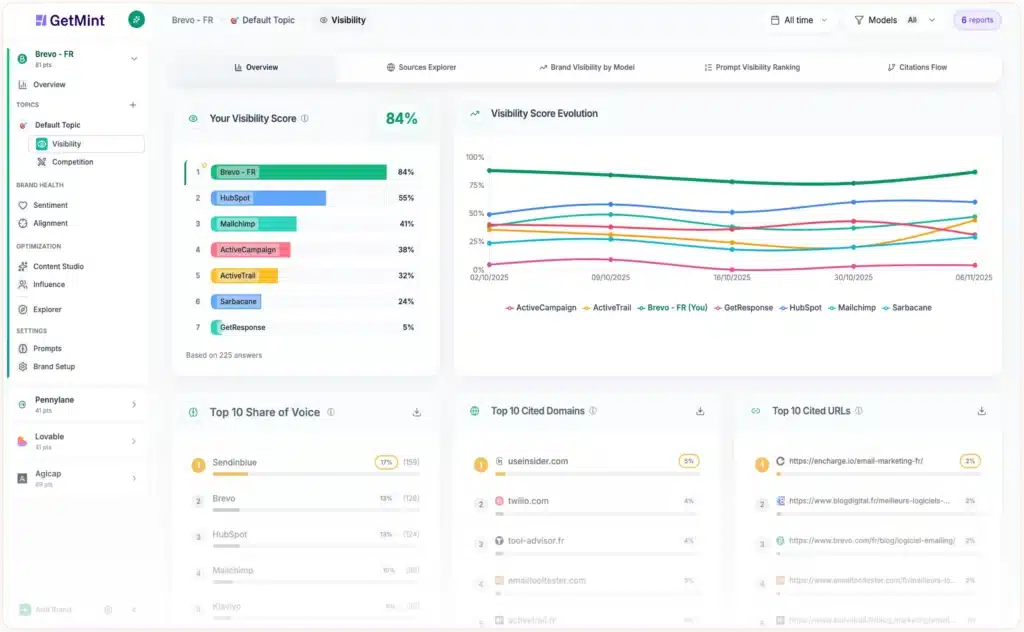
This is where GetMint fits in. It removes the consumption math and the gatekeeping.
1. Multi-Model Tracking
AirOps restricts its Solo plan to ChatGPT only. AthenaHQ restricts its Self-Serve plan to a single region.
GetMint gives you the most important engines (ChatGPT, Perplexity, and AI Overviews) standard on the Starter plan (€99). You don’t have to upgrade just to see 60% of the market.
2. Predictable Pricing
Both AthenaHQ and AirOps punish you for being active. The more you use them, the more you pay (via overages or burnt tasks).
GetMint uses a predictable prompt/refresh model. You know exactly how many keywords you can track every month without worrying that a complex workflow will drain your wallet overnight.
3. Integrated Studio
AirOps requires you to build the builder (high setup). AthenaHQ requires you to configure the agent (high trust).
GetMint is preconfigured. Besides creating a persona for your brand and adding your internal intelligence, the Content Studio is ready to write immediately. It analyzes competitors, builds the brief, and drafts the content without you needing to be a prompt engineer or a workflow architect.
Final Verdict: Which Platform Is Right for You?
Don’t guess. Look at your specific requirements below. If you need the feature, check which column gives you the green light.
| Requirement | AthenaHQ | AirOps | GetMint |
|---|---|---|---|
| Start for under $150/mo? | ❌ ($295/mo) | ❌ (Custom) | ✅ (€99) |
| Avoid counting “Credits” or “Tasks”? | ❌ | ❌ | ✅ |
| Track multi-engine visibility without contacting sales? | ✅ | ❌ | ✅ |
| Build custom logic grids? | ❌ | ✅ | ❌ |
| Push content directly to Webflow/WordPress? | ✅ | ✅ | ❌ |
| Optimize content with minimal setup? | ✅ | ❌ | ✅ |
| Edit content in a dedicated human-first studio? | ✅ | ⚠️ (Review Step) | ✅ |
| Use autonomous agents to rewrite pages automatically? | ✅ | ❌ | ❌ |
| Track revenue ROI (Shopify/GA4)? | ✅ | ❌ | ❌ |
| Monitor 8+ AI engines? | ✅ | ❌ | ✅ |
| Detect brand impersonation? | ✅ | ❌ | ❌ |
| Analyze sources feeding the AI? | ✅ | ✅ | ✅ |
So, which tool should you choose?
- Choose AthenaHQ if you’re an e-commerce brand on Shopify. The ability to attribute revenue directly to AI search is a superpower that justifies the $295/mo cost.
- Choose AirOps if you’re a technical ops team. If you want to build custom internal tools (like an SEO page builder or a support auto-responder), its logic grids make it possible.
- Choose GetMint if you’re a marketer who needs to track visibility and fix the content today. It offers the best balance of price, engine access, and ease of use without the complexity of building your own software.
Stop counting tasks and start winning answers. Run your AI visibility audit with GetMint today.
Frequently Asked Questions (FAQs)
How much does AirOps actually cost?
AirOps uses a tiered model that gives you a 3-week trial to try the platform’s features. After the trial ends, you must make a sales call and commit to one of the three plans.
The “Solo” plan is limited to ChatGPT only, the Pro plan is functional and includes 75,000 tasks, and the Enterprise plan is customized based on your specific needs.
Does AthenaHQ work without Shopify?
Yes, you can use it for visibility tracking and content generation. However, its revenue attribution feature (one of its biggest selling points) requires a Shopify or GA4 integration to function fully.
Without that, you’re paying a premium for features you can’t use.
What is the difference between a “task” and a “credit”?
A credit (AthenaHQ) usually covers a full output (e.g., “Receive an AI response). On GetMint, credits are used for content creation via the Content Studio only.
A task (AirOps) covers a single step (e.g., “Google Search” is 1 task, “Summarize” is 1 task, and “Draft” is 1 task). A single complex workflow run in AirOps might consume 20 tasks, so that 75,000 allowance burns faster than it looks.
Do these tools replace Semrush?
Not entirely. AirOps integrates with Semrush to pull keyword data. AthenaHQ focuses on AI visibility. Neither platform provides the deep backlink analysis or technical site audits that Semrush offers. They’re action layers built to sit on top of your SEO data.
Can I write content with GetMint?
Yes. Unlike AirOps (which requires you to build a builder) or AthenaHQ (which uses autonomous agents), GetMint offers a Content Studio where you can generate briefs and write articles manually or with AI assistance, giving you full editorial control immediately.

